Brezeln
with a lemony twist.

deutsche Version unten
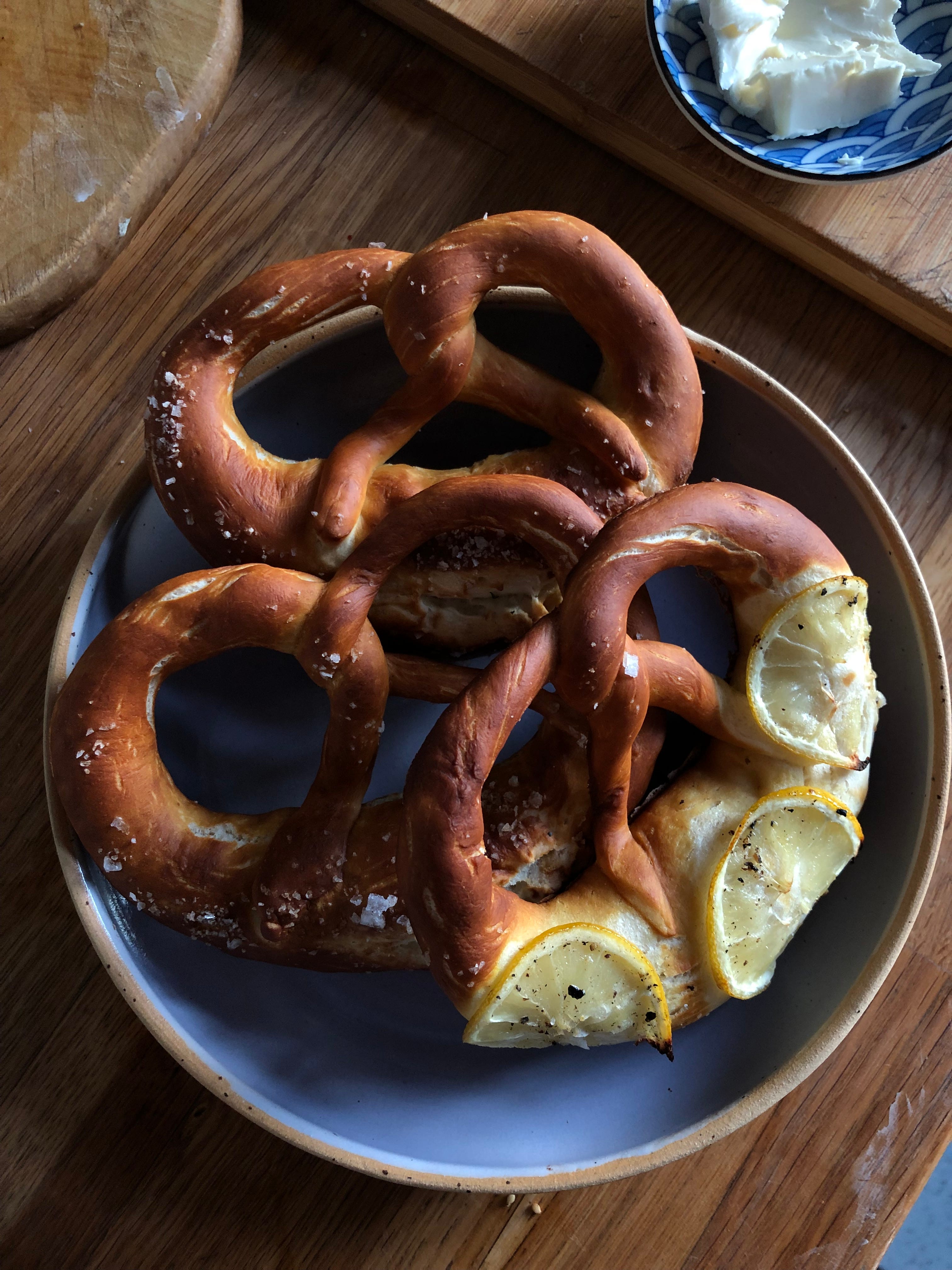
Ok first of all: it’s Brezel not Pretzel. But you can call them whatever you want. It’s one of Germany’s most beloved baked good, sold at almost every bakery. The brown exterior comes from lye (chemics, don’t ask me) which also gives it the more specific German name “Laugenbrezel” (lye pretzel). Hard-working bakers have created a lot of other lye baked goods such as bread rolls, bread sticks and even croissants. But we will stick to the original for now and make the classic pretzel shape. I added another optional twist flavorwise and will share other alterations with you.
This recipe uses dry yeast and takes about 2-3 hours. So you can enjoy them the same day - which you should! I am using an widely accesible alternative to real bakers lye: baking soda. I heard that some people had problems achieving the brownness with commercial baking soda, but for me it worked every time for now. I think the key is using a lot and also using a freshly bought one. I recommend the brand “Kaisernatron”.
A little note on my recipe: this is not a traditional recipe but it tends to be more like the Swabian version aka more thin and crusty strings unlike the chewy and fluffy Bavarian Brezel. Just keep that in mind when you make it. :) Also I kept it vegan but you can use real butter if you want to.
Ingredients
500g white flour
270g water
7g dry yeast
1 teaspoon sugar
10g salt
50g vegan/normal butter at room temperature
50g baking soda
300g boiling water
sea salt flakes
optional: lemons thinly sliced, salt, pepper, olive oil for decoration
Method
Mix warm tap water, yeast and sugar and let it bloom for five minutes. Then add your flour and salt mix for 5 minutes with a hand mixer or stand mixer at medium speed (although i recommend using a stand mixer here). Cover and let it rest for 10 minutes.
Now add the butter all at once and mix for another 5 min or until smooth. Dough will split but come together again so don’t worry! If using a hand mixer you might need to get in there with your hands as well, depending on the power of your hand mixer. If using your hands knead on your counter top and knead and stretch until the butter is fully incorporated and the dough is smooth. Now shape into a ball and let it proof covered in a warm place for about one hour.
Degas the dough and form balls of about 95-100g. Let those rest for 10 minutes covered.
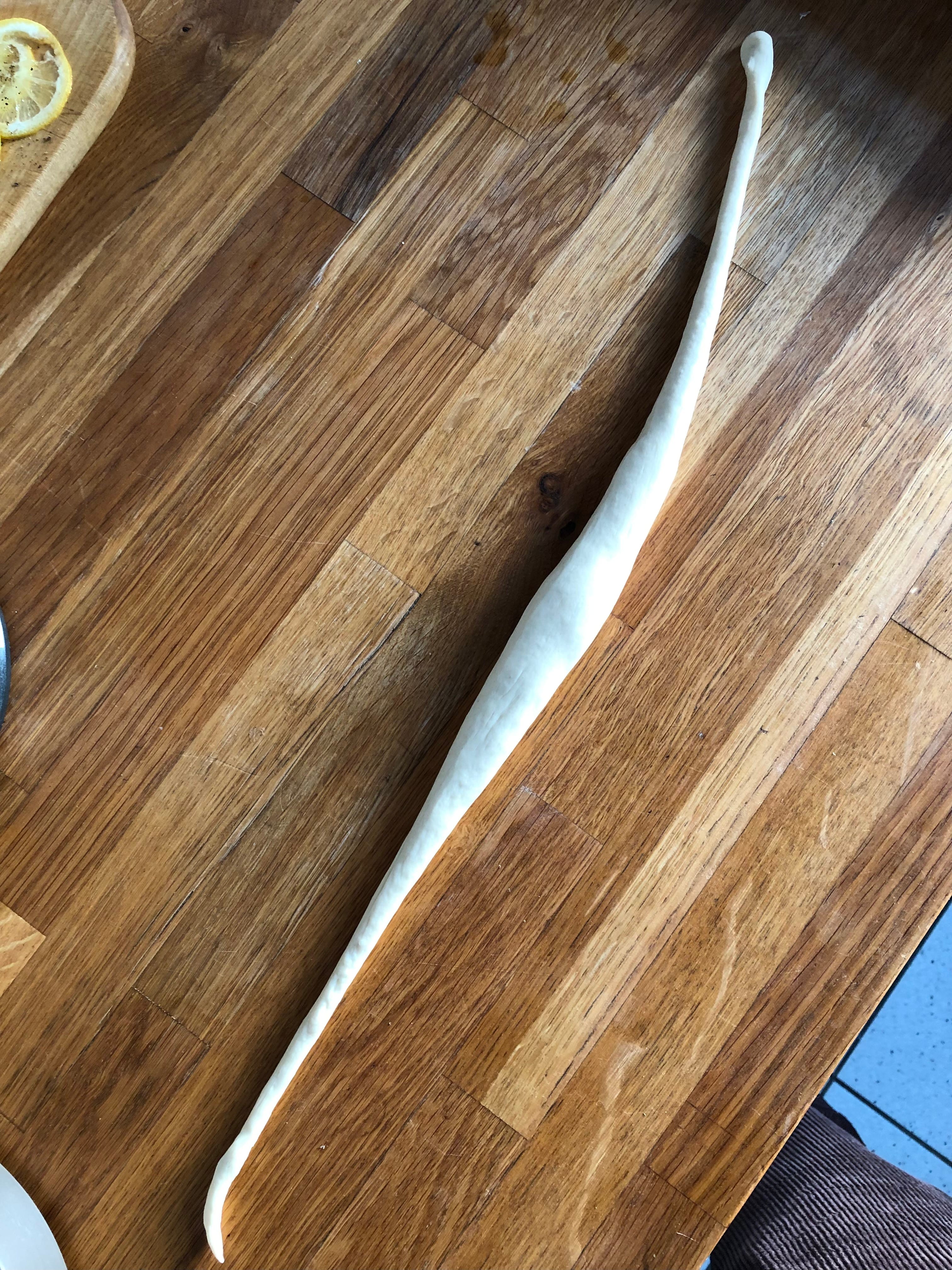
Shape into pretty long strings, leaving them thicker in the middle for about 8 cm, total length about 30-40 cm. It should look like this:
Then you shape the brezel like this:
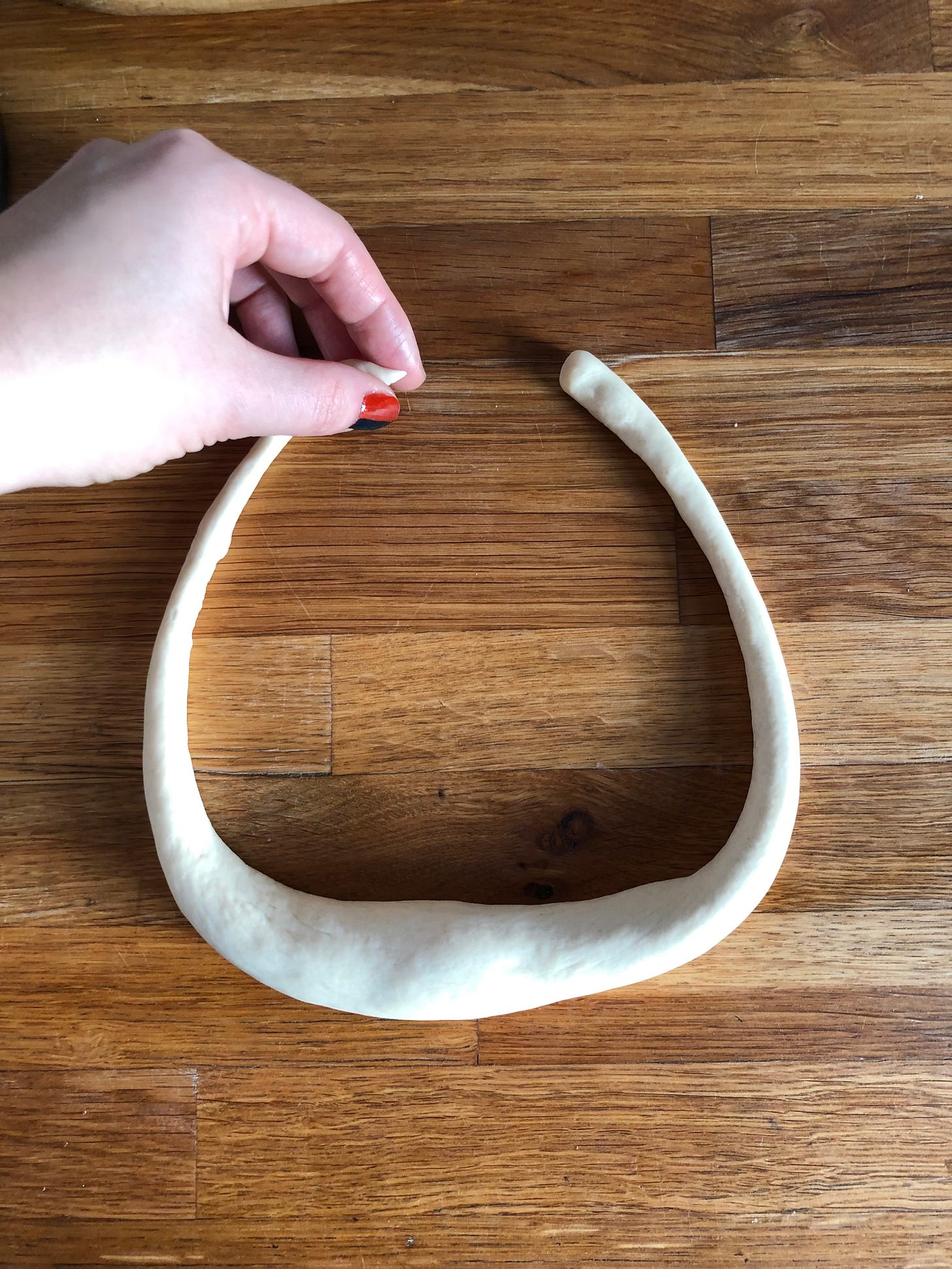
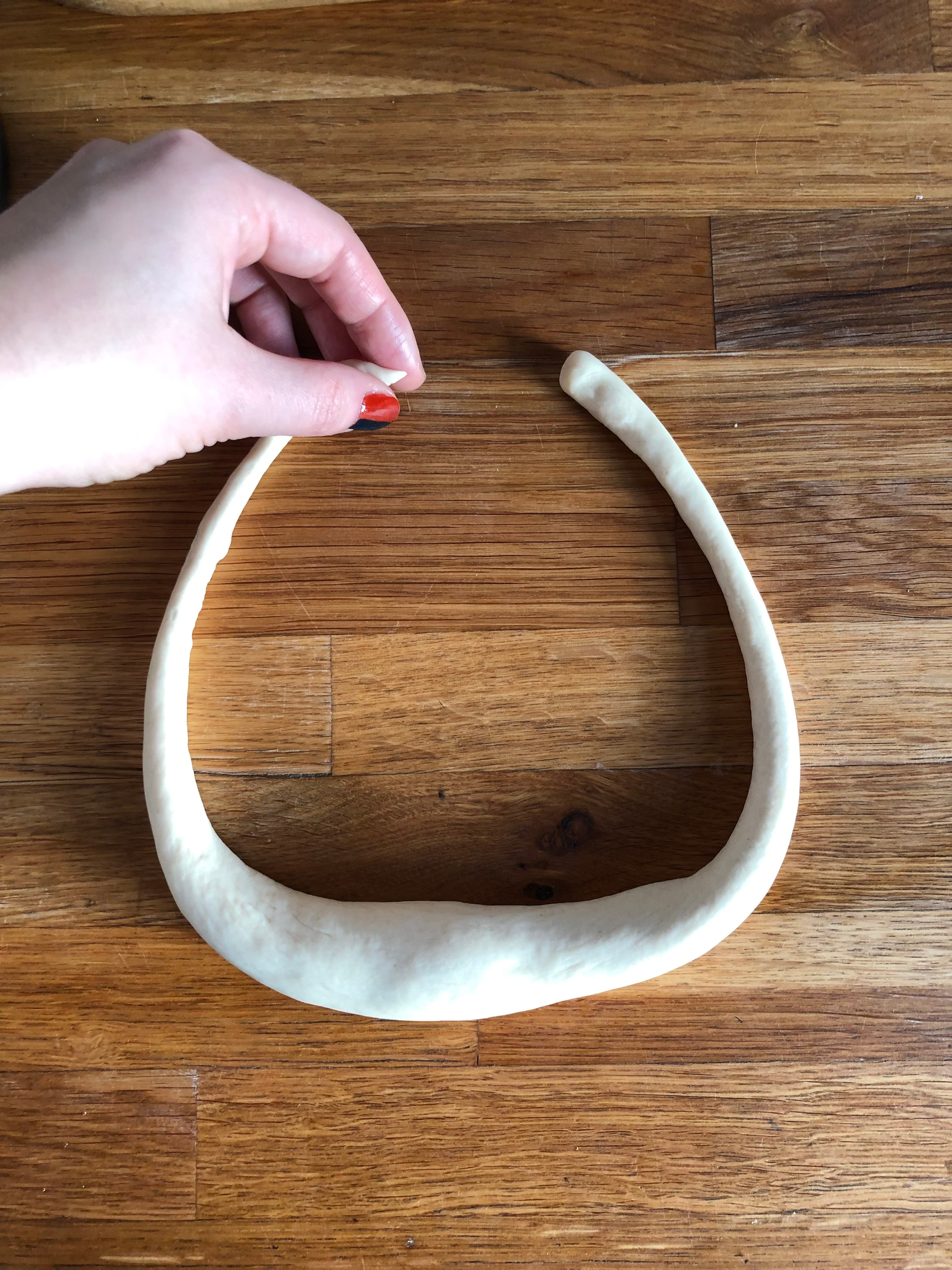
Bring the ends into an U-shape:
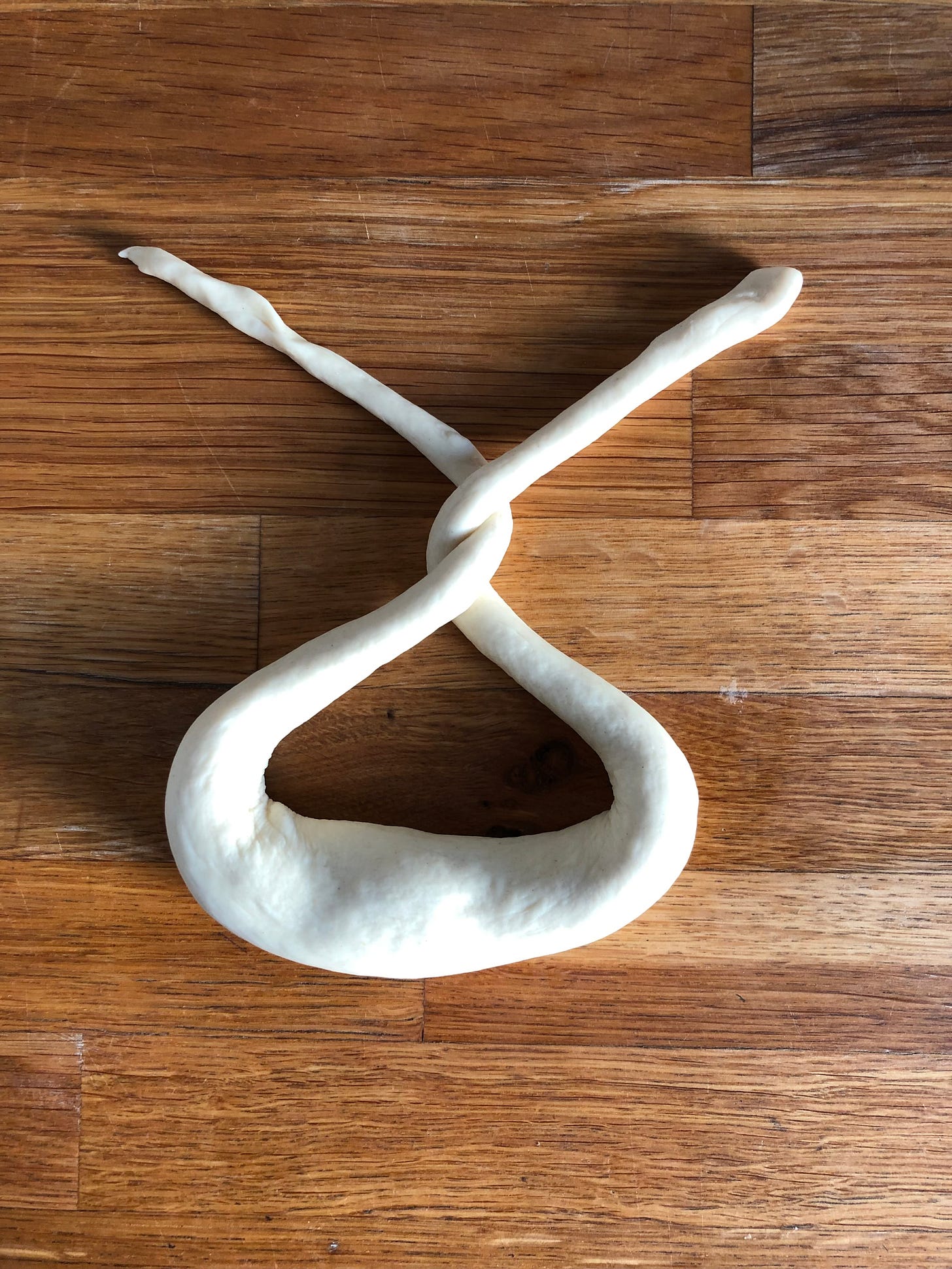
Lay the strings on top of each other:
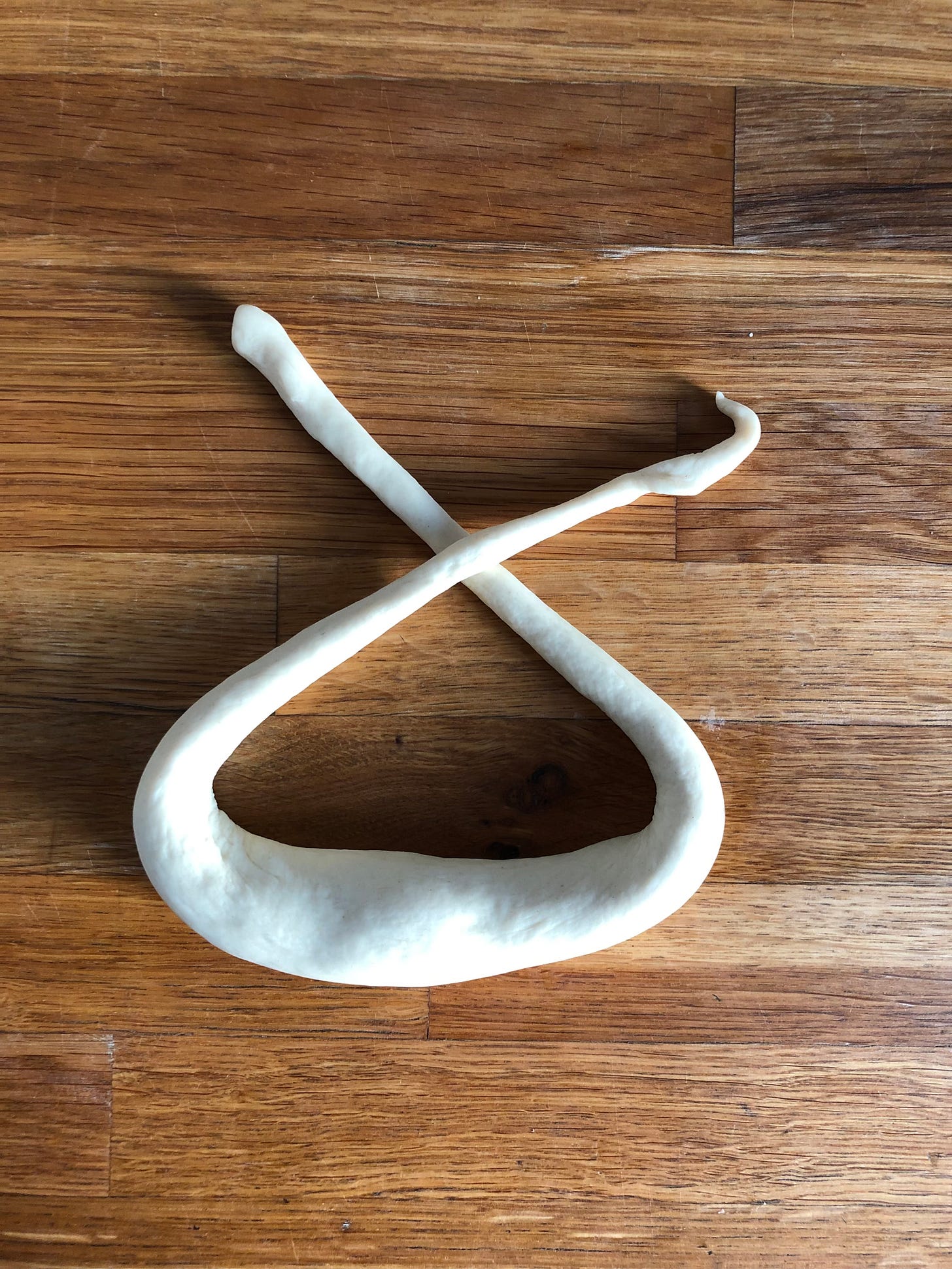
Twist one time:
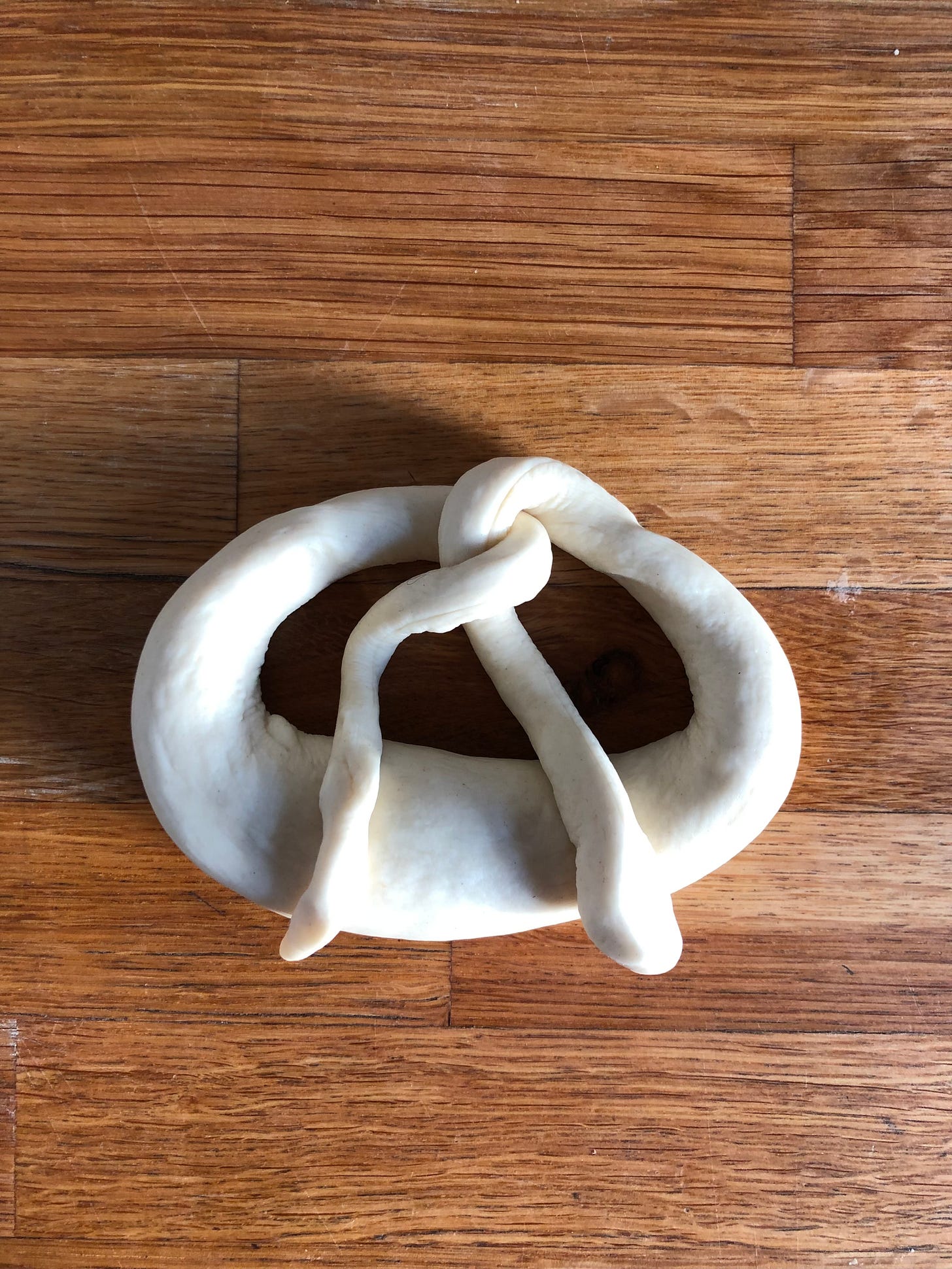
Put the strings back on top of the thicker middle part:
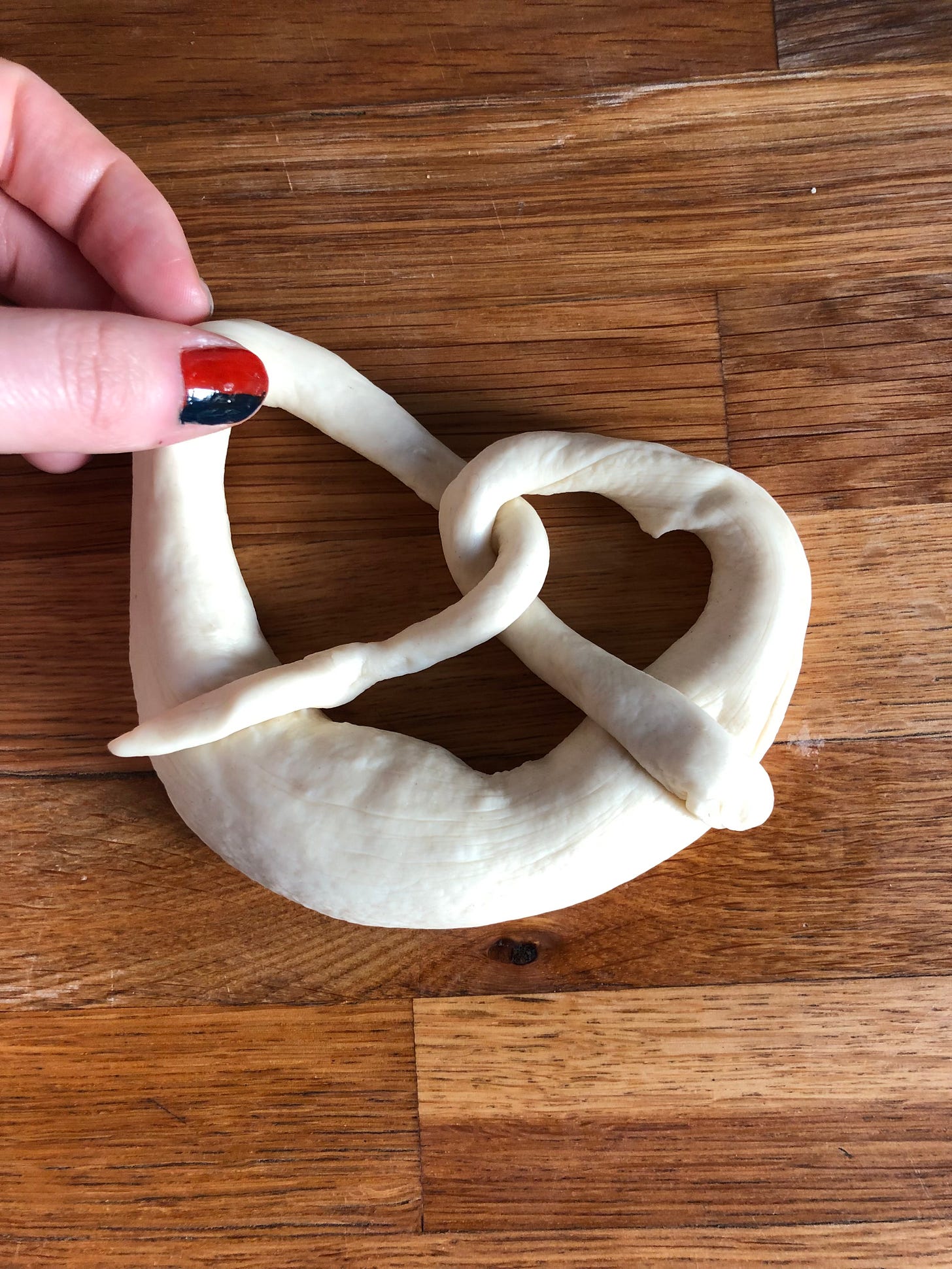
Pull it into size you prefer:
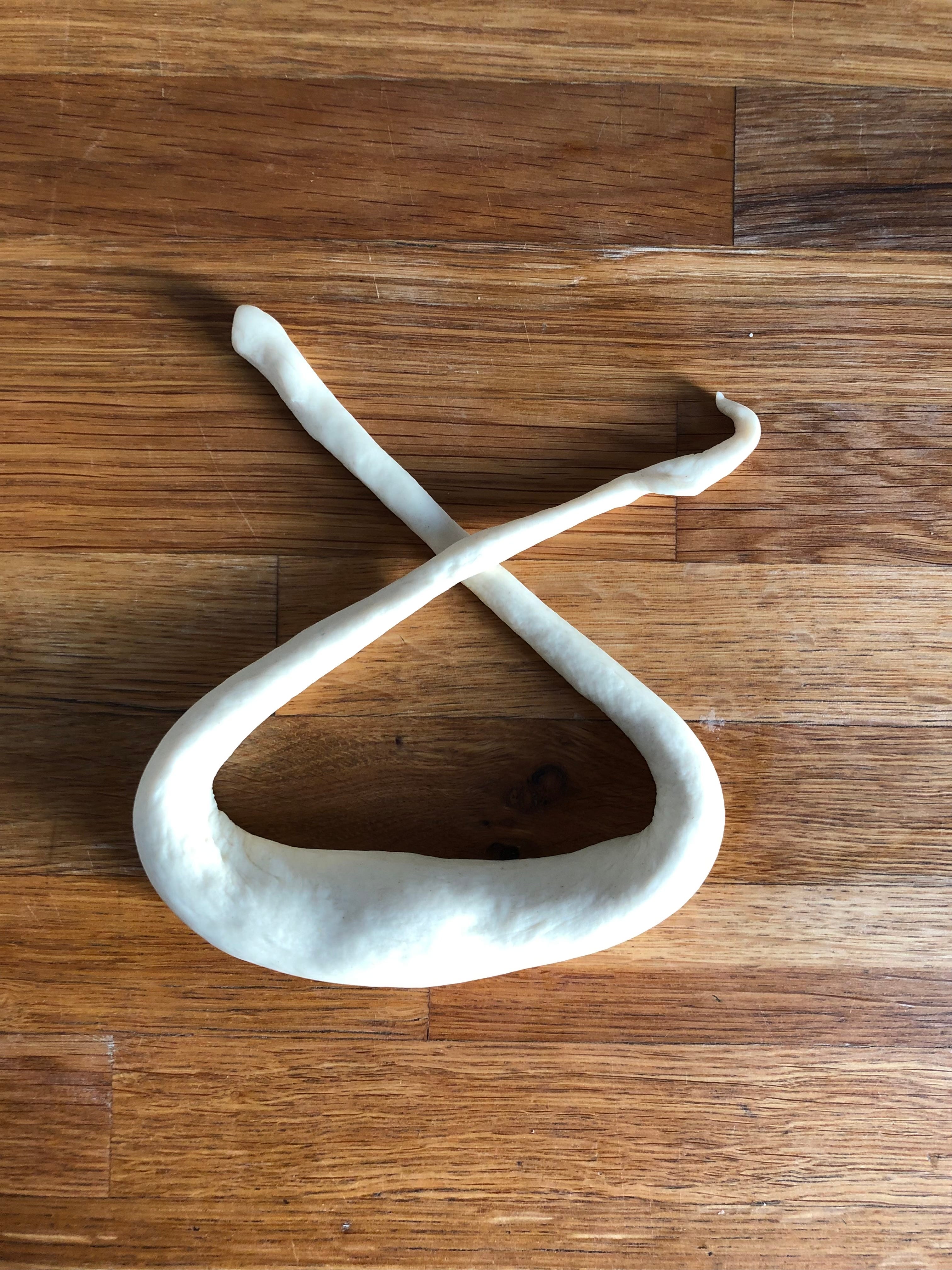
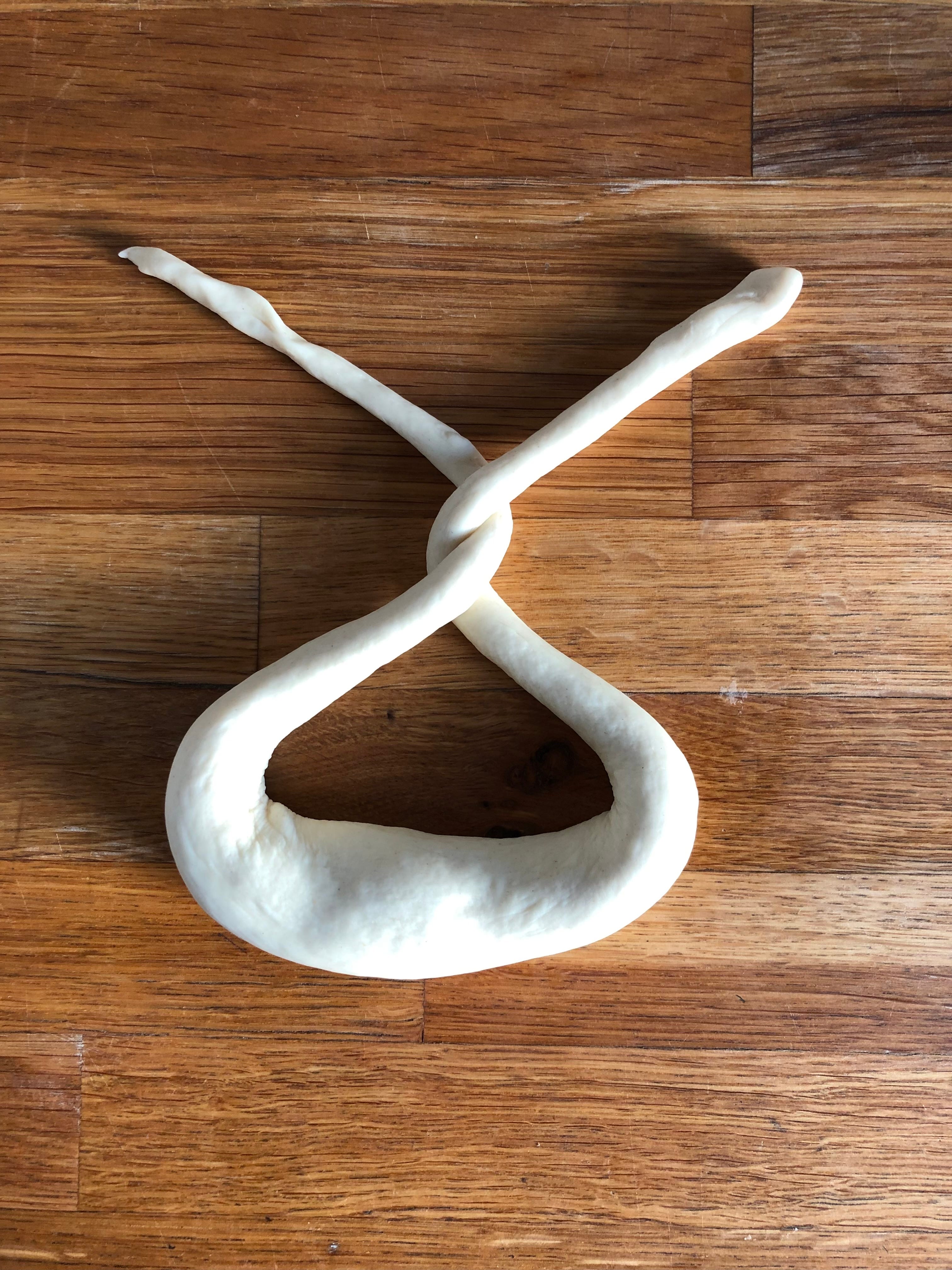
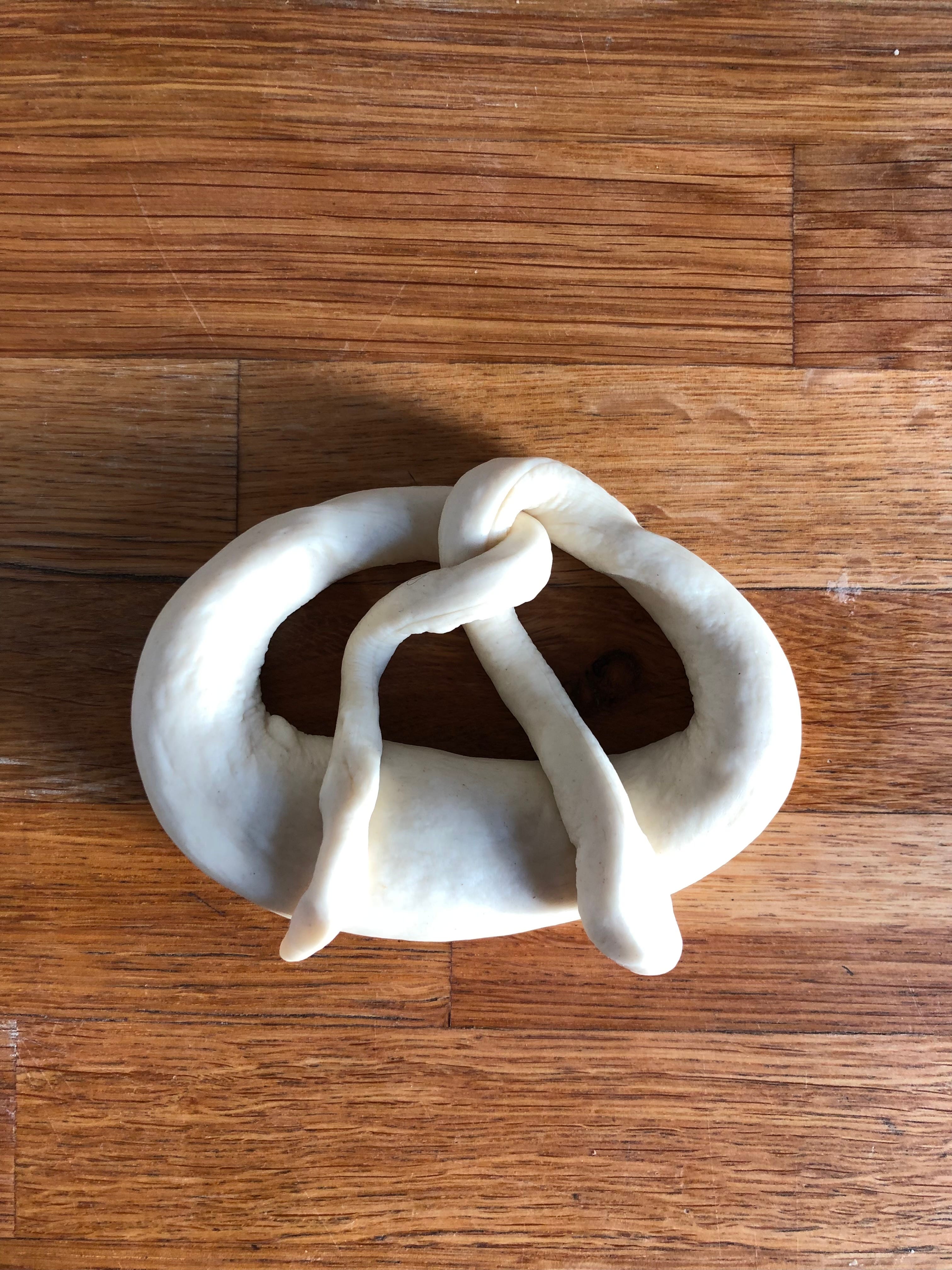
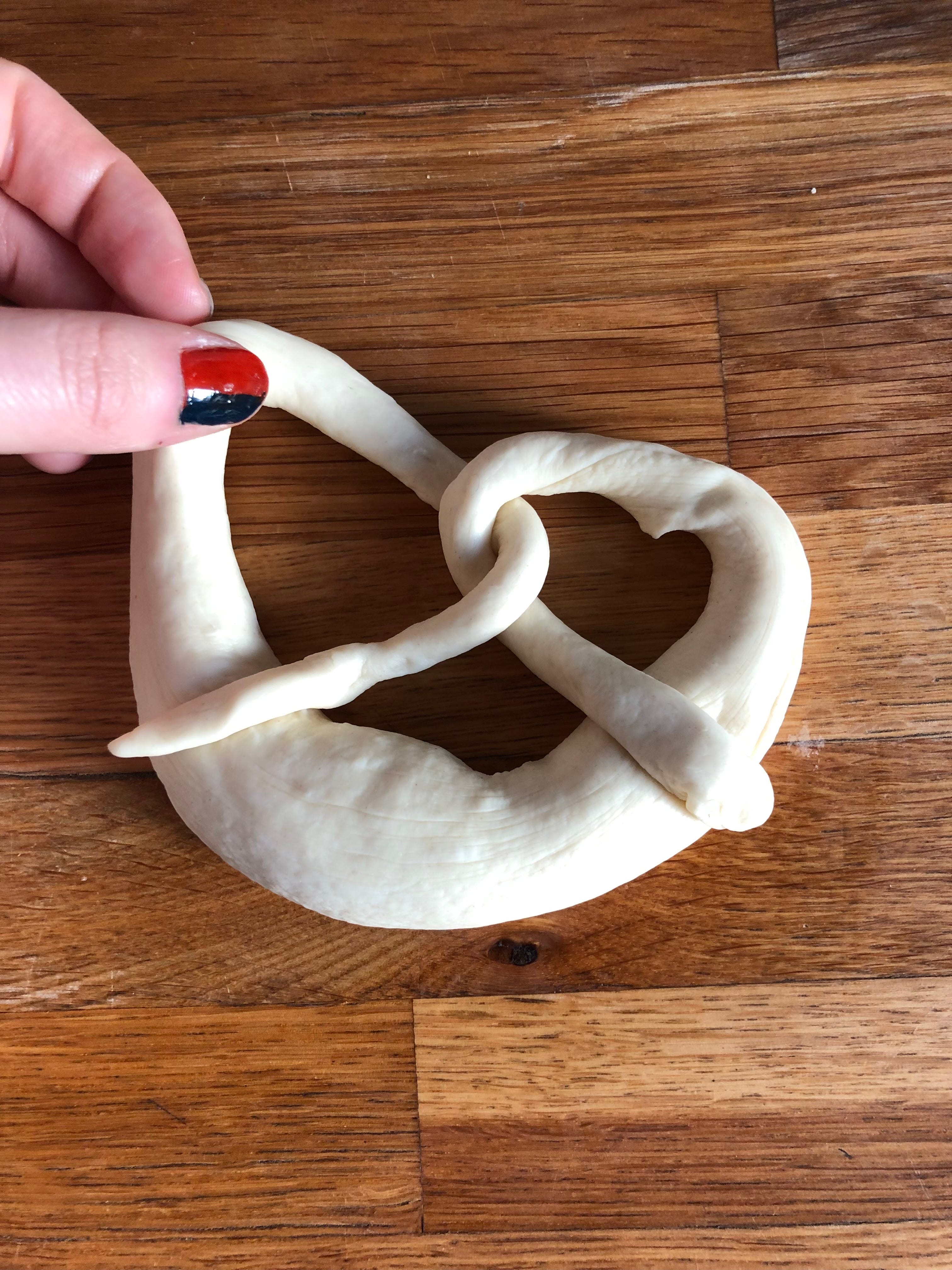
Now they’re ready for their lye bath. Put the baking soda in a bowl and add your nboiling water and mix. Now one brezel at a time, you’ll let them glide into the water making sure they’re fully submerged. !Use gloves and other utensils because of the chemical solution and of course because it’s boiling hot! Take the brezel out of the water and put on a baking paper.
Decorate with salt and make a cut in the thick part for the traditional version.
Bake in a preheated oven at 200C until golden brown ( ca. 20 minutes).
Watch my process here:
Lemon variation
I decided to add a little twist to my Brezel this time. I put thin slices of lemon (that i seasoned with salt, pepper and a little drizzle of olive oil) onto the thicker part. I only realized the error of this when they were baking: the middle parte with the lemons didn’t really brwon as much as the rest. I accidentally must have destroyed that chemical lye reaction! But they tasted really funky and special that I decided to keep it in the recipe anyway. So if you like some funk on your brezel: add lemon.
Other variations you can try is of course seeds on top like sesame, sunflower or pumpkin seeds, which are all very popular version in Germany. You could also add a lot of black pepper or even herbs such as rosemary or oregano. Another thing I once did was adding roasted spring onion and embroiding them into the Brezel shape inspired by a recipe by Paris Starn (see picture below). So go wild with your Brezel!
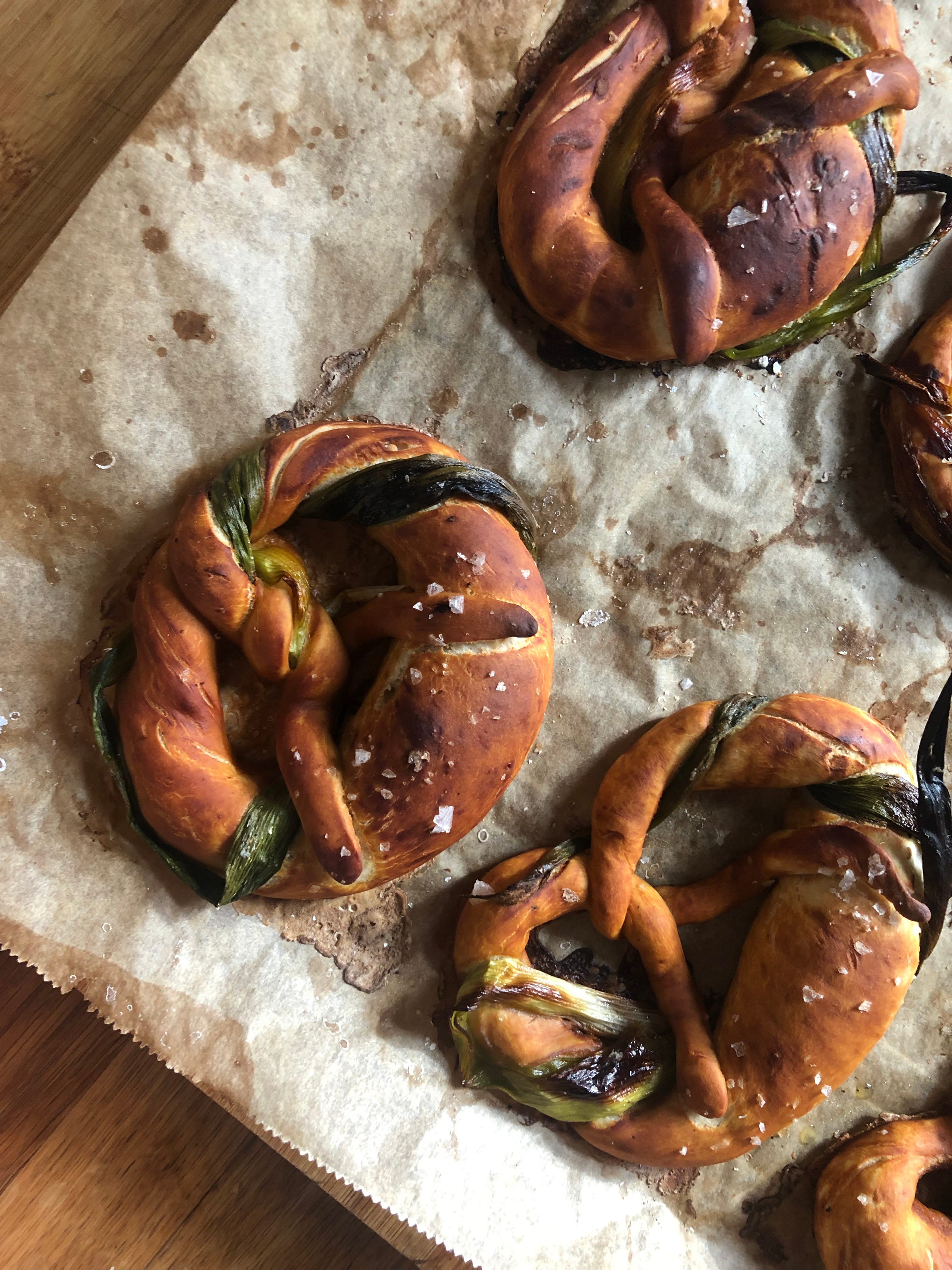
Brezel with roasted spring onion embroidered into the shape.
Brezeln, selbstgemacht
Hier ist mein Rezept für Brezeln. Das Rezept ist eigentlich ganz einfach, schon nach ca. 2 Stunden könnt ihr eure eigenen Brezeln genießen. Für die Lauge benutze ich Kaisernatron. Hat bei mir bisher immer gut funktioniert, am besten jedoch drauf achten, dass das Natron relativ frisch ist.
Das Rezept ist für neun Brezeln, ihr könnt aber auch mehrere kleinere machen. Die werden eher etwas knusprig und erinnern mich daher eher an schwäbische Brezeln als an bayrische. Na ja, nur dass ihr Bescheid wisst… ;)
Zutaten
500g Weizen Typ 550
270g Wasser
7g Trockenhefe
1 Teelöffel Zucker
10g Salz
50g zimmerwarme Margarine (ich nehme Alsan) oder Butter
50g Natron (Kaisernatron)
300g kochendes Wasser
Meersalzflocken
Optional: hauchdünn geschnittene Zitronenscheiben mariniert mit etwas Salz, Pfeffer und Olivenöl
Zubereitung
Das warme Wasser mit der Hefe und dem Zucker vermischen und fünf Minuten quellen lassen. Mehl und Salz hinzufügen und mit dem Handmixer oder in der Küchenmaschine fünf Minuten bei mittlerer Stufe kneten. Abdecken und 10 Minuten ruhen lassen.
Butter hinzufügen und bei mittlerer bis hoher Stufe nochmal 5 Minuten kneten. Es wird wahrscheinlich am Anfang erstmal komisch aussehen, der Teig kommt aber wieder zusammen und sollte nach fünf Minuten wieder elastisch und glatt aussehen. Sonst noch etwas länger kneten. Das ganze lässt sich natürlich auch per Hand kneten, dauert dann wahrscheinlich nur etwas länger.
Wieder abdecken und eine Stunde lang an einem warmen Ort gehen lassen.
Nun in ca. 9 Teile a 95-100g teilen und zu glatten Kugeln formen. Wieder abgedeckt ca. 10 Minuten gehen lassen, so entspannt sich der Teig und ist besser zu formen. Nun zu langen Schlangen formen. Dabei sollte ein ca. 8 cm langer Teil genau in der Mitte etwas dicker bleiben, der Rest jedcoh gleichmäßig. Insgesamt können die Schlangen so ca. 30 cm lang sein. Nun wie folgt formen:
1. Ein U formen.
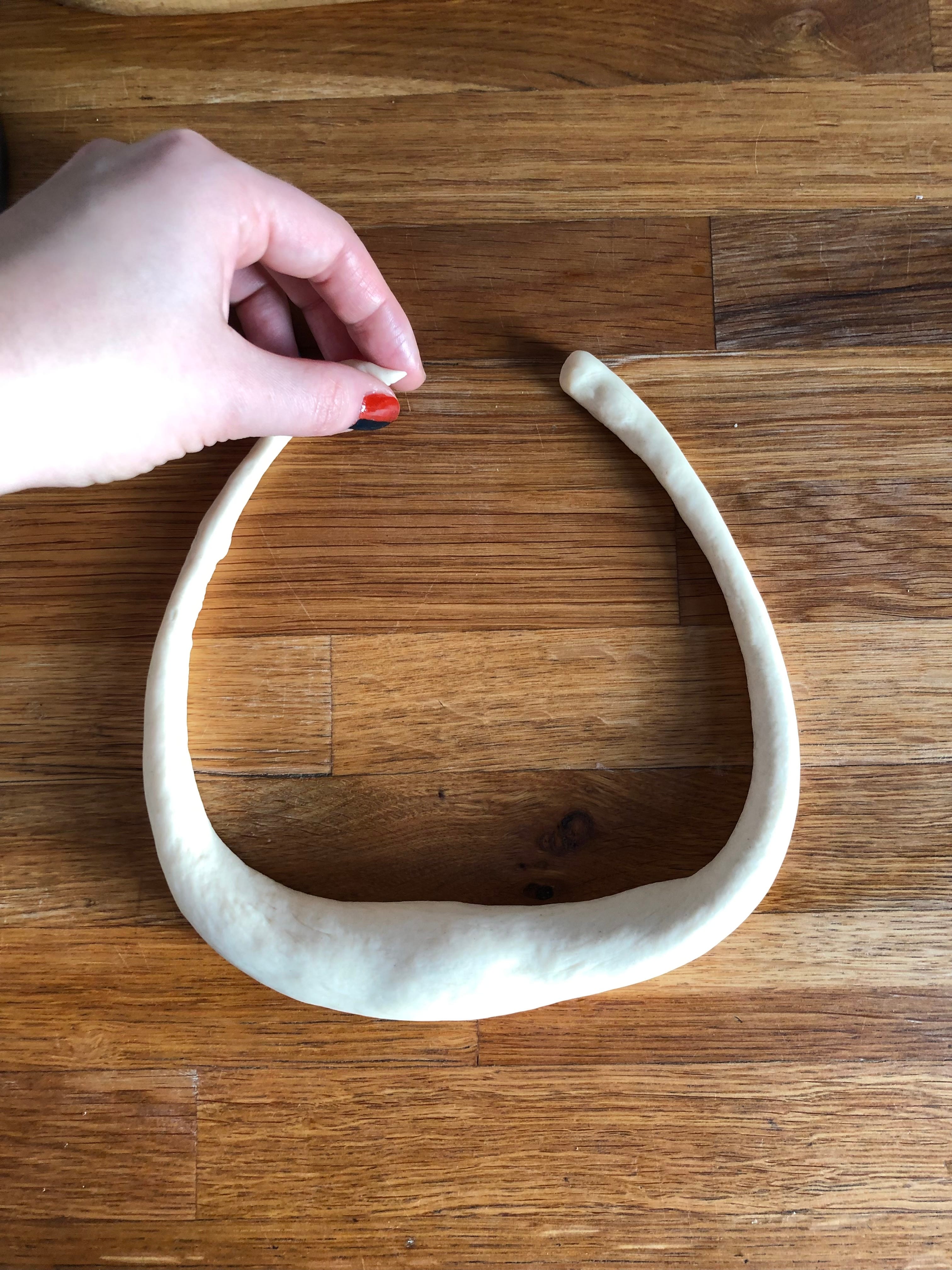
2. Die beiden Schlangenenden übereinander legen und einmal verkreuzen.
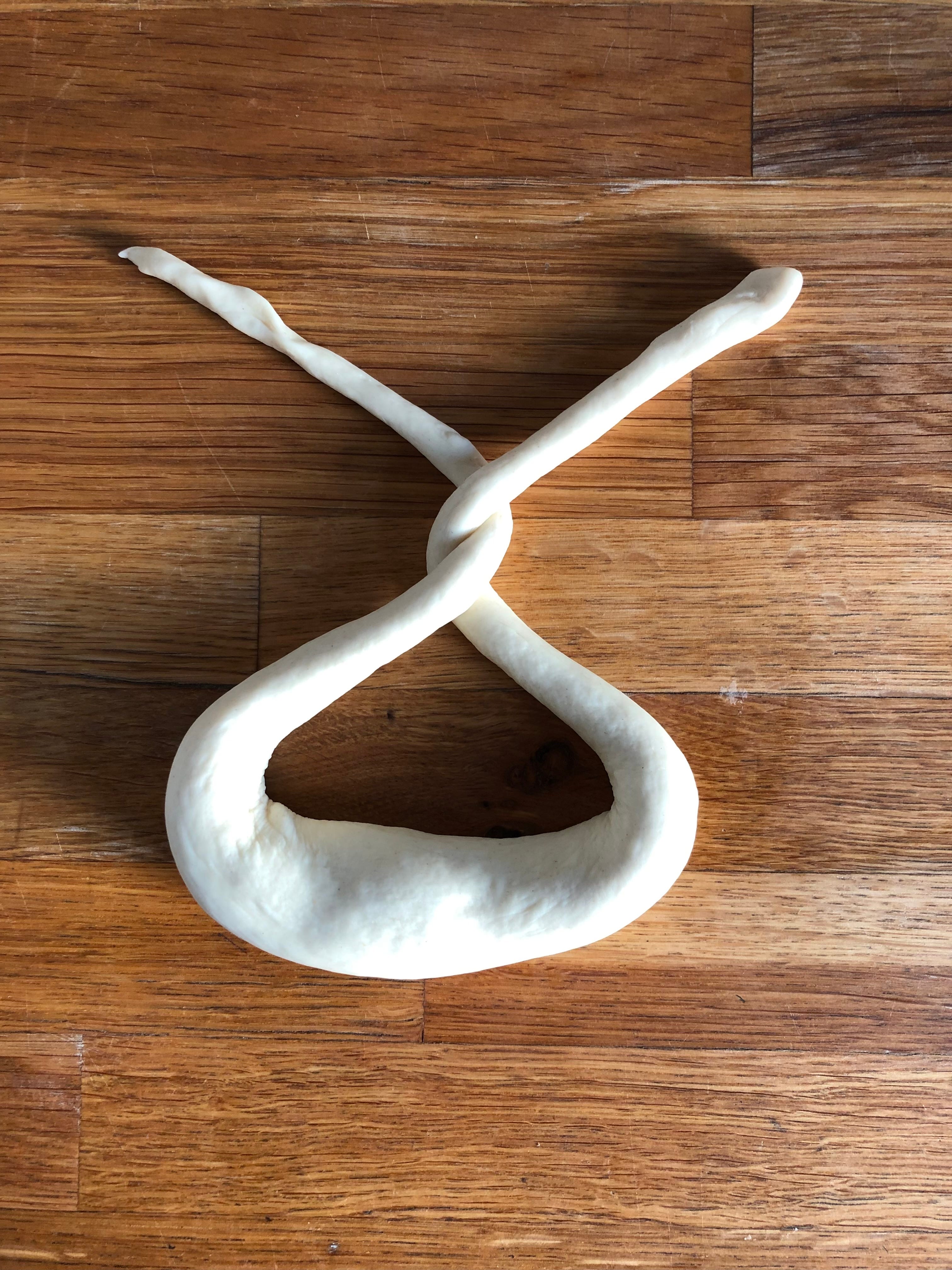
3. Nun zurück zum mittleren dicken Teil führen.
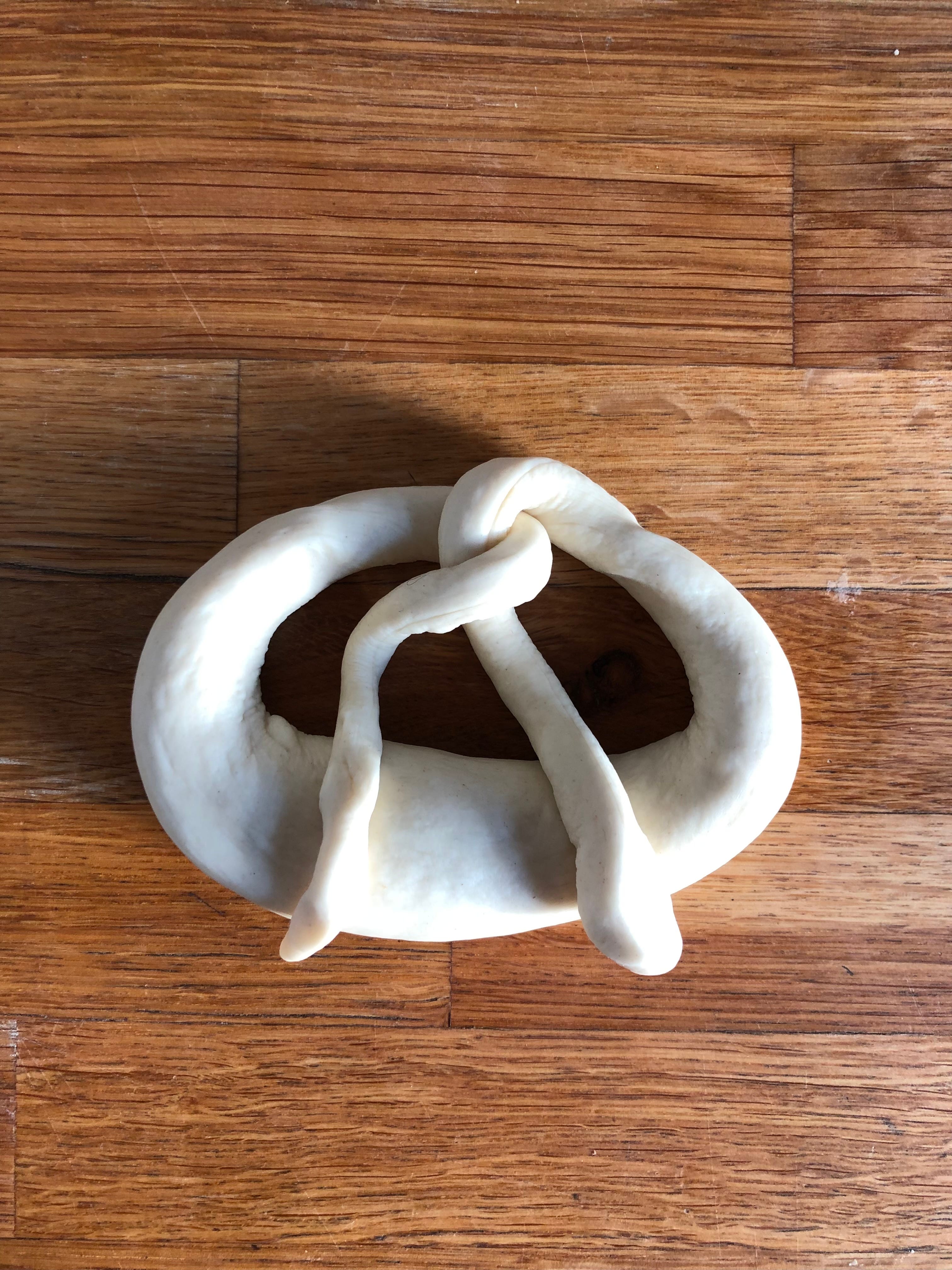
4. Die Brezelform noch etwas breiter auseinander ziehen.
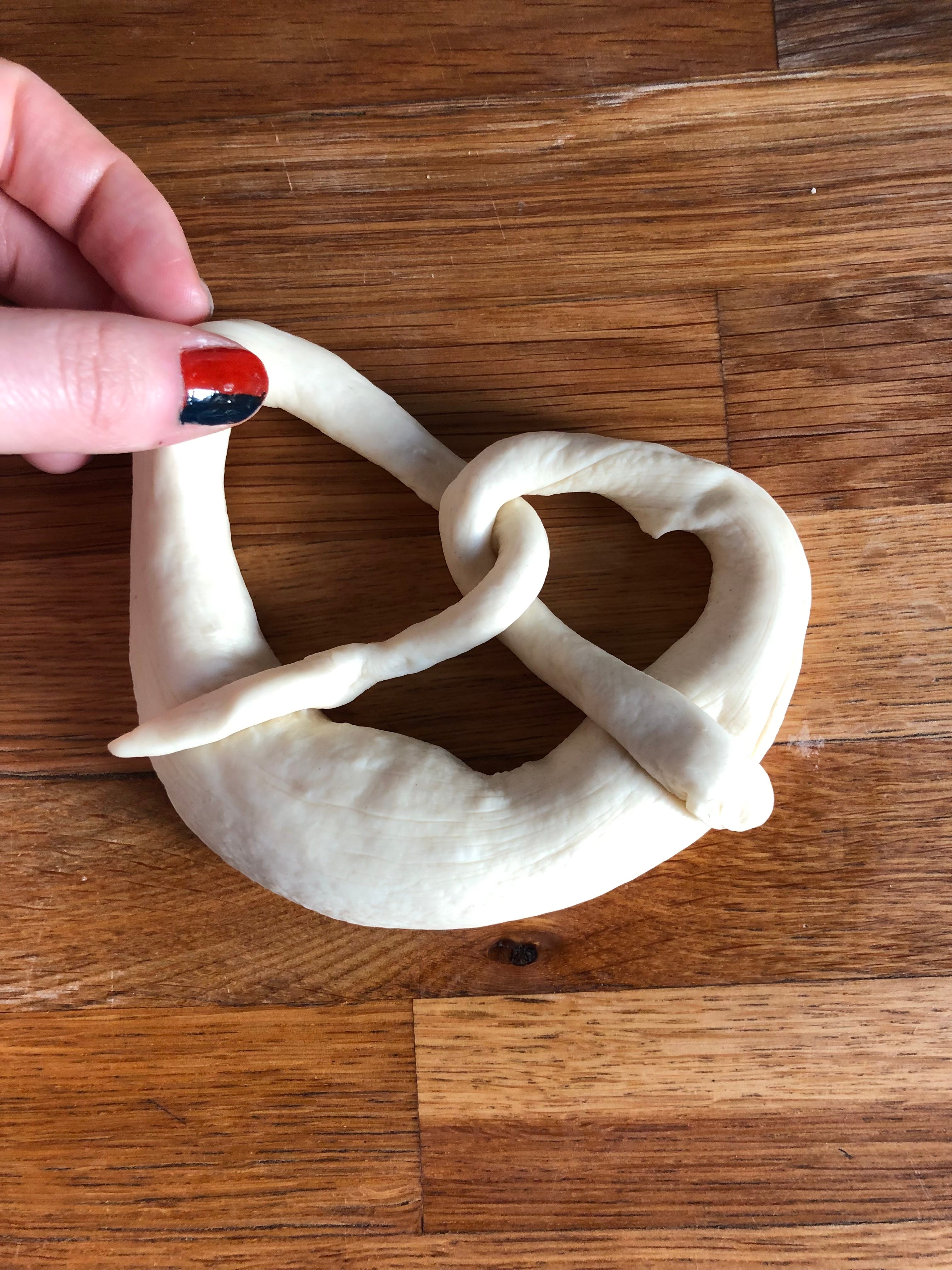
Nun schonmal den Ofen auf 200C vorheizen. Die Brezeln kriegen noch ihr Laugenbad und werden dann gebacken. Für das Laugenbad das Natron mit dem heißen Wasser aufgießen und mischen. Jetzt zieht besser Gummihandschuhe anziehen und mit Küchenutenislien (z.B. Schöpfkelle) arbeiten, damit wir weder die Finger verbrennen noch verätzen oder ähnliches. Aber keine Angst, die Lauge ist nicht wirklich ätzend, ich wollte es nur nicht riskieren. Die Brezeln einzeln in die Lauge geben, sodass sie einmal bedeckt sind und auf ein Backpapier legen. Mit Salz bestreuen und das dicke Mittelstück mit einem scharfen Messer einritzen.
Für 20 Minuten (oder bis zur gewünschten Bräune) backen.
Zitronenbrezeln und andere Varianten
Ich hab diesmal noch eine Varoiante mit Zitronenscheiben gemacht, die ich auf den mittleren Teil kurz vorm Backen gelegt habe. Tatsächlich hat die Zitronensäure ein wenig die chemische Reaktion der Lauge durcheinander gebracht, sodass es unter den Zitronenscheiben nicht ganz so gebräunt war. Es war jedoch immer noch ziemlich lecker und die bitteren, sauren Zitronenscheiben haben die Brezeln noch viel interessanter gemacht.
Andere Varianten sind natürlich Körner und Samen wie Sesam, Mohn, Sonnenblumen- oder Kürbiskerne. Lecker ist es bestimmt auch mit Kräutern wie Rosmarin oder Oregano oder mit schwarzem Pfeffer. Ich hab auch mal eine Version mit gerösteten Frühlingszwiebeln gemacht, die ich quasi in die Brezel mit eingeflochten habe. Der Kreativität sind quasi keine Grenzen gesetzt.
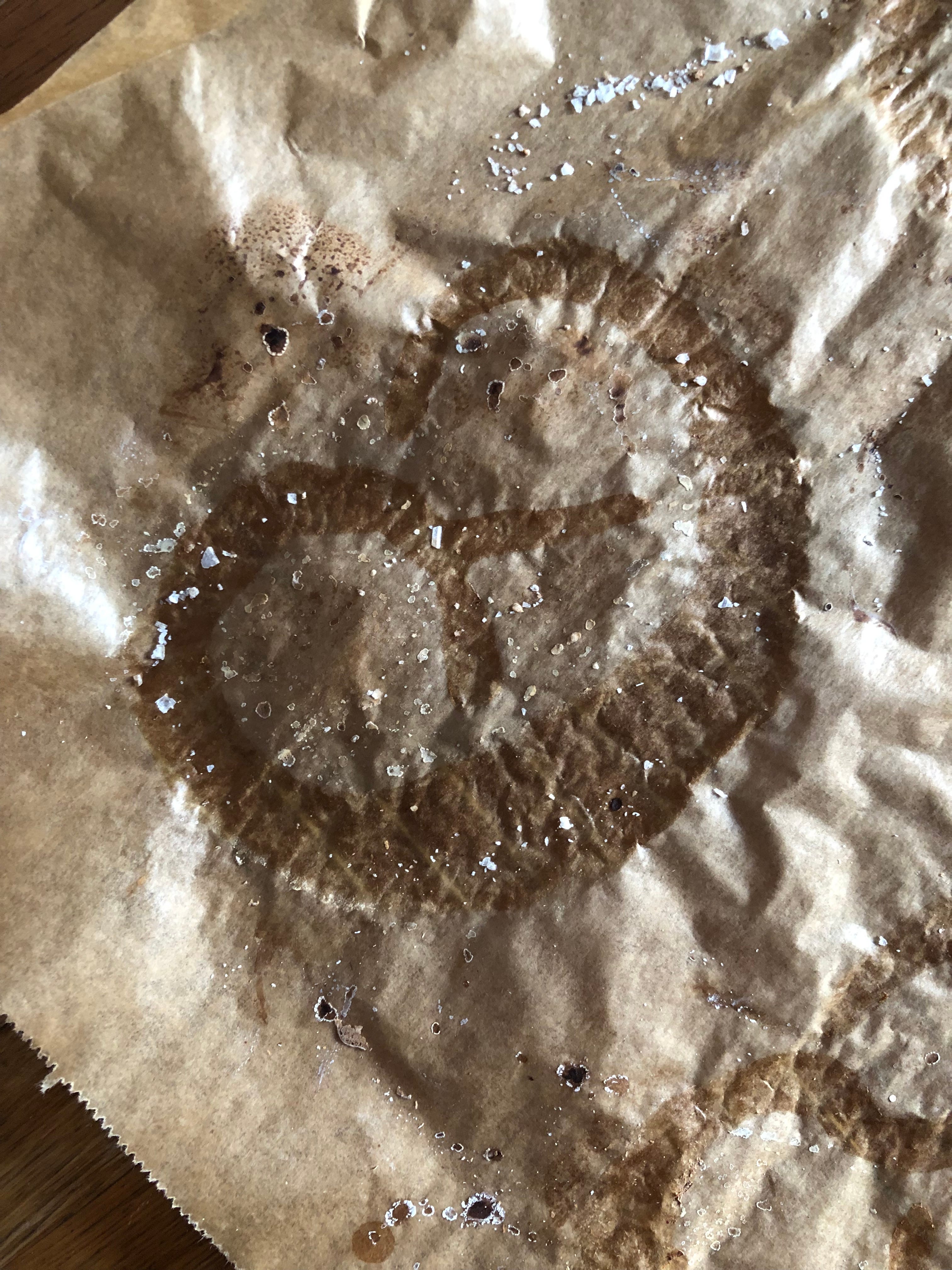
i enjoy the pure swabian version the most but i'm very open for all the new variations you made...
Baked today, with 4g yeast and overnight proofing. Turned out veeeery well! Thank you 🫶🏻